Dolphins in Depth Guide

Lucas Schneider
| 03-06-2026
 · Animal Team
Dolphins are highly intelligent and socially complex marine mammals known for their agility, communication skills, and important role in ocean ecosystems.
Beyond their playful appearance, they demonstrate advanced behaviors that continue to be studied by marine scientists.
The Dolphin Family
Dolphins belong to the order Cetacea, which also includes whales and porpoises. Within this group, dolphins are classified under toothed cetaceans. There are approximately 40+ recognized dolphin species found in oceans and some river systems worldwide, ranging from tropical waters to colder marine environments.
The largest dolphin species is the orca, which can reach lengths of up to 10 meters and weigh several tons. In contrast, smaller species such as the Maui dolphin measure just over 1 meter in length and are among the smallest marine mammals.

Evolution of Dolphins
Dolphins evolved from land-dwelling mammals that gradually adapted to aquatic environments over millions of years. Their skeletal structure still reflects this origin, particularly in the similarity between their fins and the limb bones of terrestrial mammals.
Unlike fish, dolphins move their bodies using vertical spinal motion. They also breathe air through a blowhole located on top of their heads, a key adaptation for life in the ocean.
Communication Skills
Dolphins are known for their advanced communication abilities. They produce a wide range of sounds, including clicks, whistles, and pulsed signals, which are used for social interaction and coordination within groups.
Each dolphin develops a unique signature whistle that functions similarly to an individual identifier. Dolphins also rely on echolocation, a biological sonar system that allows them to navigate, locate prey, and interpret their surroundings in low-visibility environments.
Intelligence and Behavior
Dolphins are widely regarded as one of the most intelligent non-human species. Research shows that they possess strong memory, problem-solving skills, and self-recognition abilities.
They are also capable of using tools in certain environments. In some populations, dolphins use marine objects such as natural sponges to protect their snouts while foraging on the seafloor. This behavior demonstrates adaptability and environmental awareness.
Speed and Movement
Dolphins are highly efficient swimmers, capable of reaching speeds of up to 50 km/h depending on the species. They are also capable of deep diving to hunt prey such as fish, squid, and crustaceans.
Their daily activity includes a combination of hunting, traveling, and social interaction. Many species also display energetic surface behaviors such as jumping and spinning, which are believed to support communication and social bonding.
Reproduction and Lifespan
Dolphins typically reach reproductive maturity between 5 and 13 years of age, depending on species. Gestation periods range from approximately 9 to 16 months, with females usually giving birth to a single calf.
Dolphin calves are cared for not only by their mothers but also by other members of their social group. Lifespans vary widely, with many species living 20 to 40 years in the wild, while some larger species may live significantly longer.
Dolphins in Human Care
Some dolphins live in human-managed environments such as marine facilities. These environments differ significantly from their natural habitats, which can span vast ocean areas.
Scientific observations indicate that restricted space and artificial conditions may influence natural behaviors and social structures. As a result, animal welfare standards continue to be a major focus in marine conservation discussions.
Conservation and Protection
Dolphins face several environmental challenges, including habitat degradation, pollution, climate-related changes, and accidental capture in fishing equipment. Some species are considered at risk due to declining populations.
Conservation efforts focus on habitat protection, sustainable fishing practices, and marine ecosystem preservation. Protecting dolphins also contributes to the overall health of ocean environments.
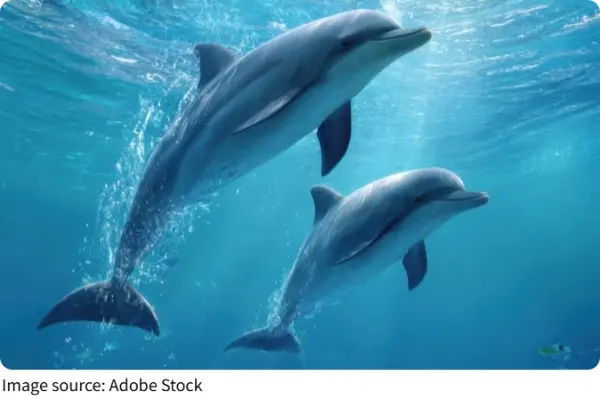
Dolphins represent one of the most advanced and socially complex groups of marine mammals. Their intelligence, communication abilities, and ecological importance highlight the need for continued research and conservation. Ensuring healthy marine ecosystems is essential for the long-term survival of dolphin populations worldwide.