Great Horned Owls

Amit Sharma
| 31-03-2026
 · Animal Team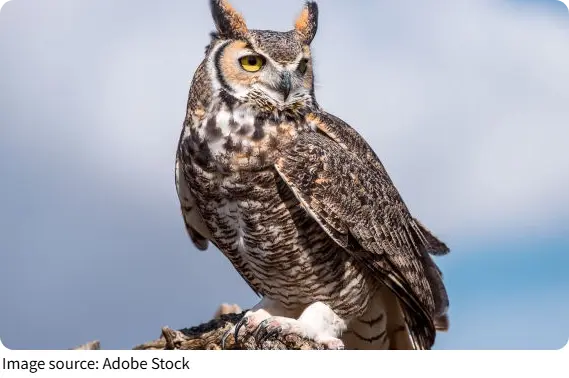
The Great Horned Owl is one of the most recognizable and fascinating birds of prey in North America.
Known for its tufted "horns" and formidable hunting skills, this owl has captivated bird enthusiasts and wildlife watchers for centuries. But what makes the Great Horned Owl so remarkable? Let's take a look at some interesting facts that shed light on this majestic creature.
1. Tufts Aren't Ears
One of the most iconic features of the Great Horned Owl is its tufted "horns"—the tufts of feathers on its head. Despite their appearance, these "horns" are not ears at all. Instead, they are simply feather tufts that help with camouflage, blending the owl into its woodland habitat. The owl's actual ears are located asymmetrically on its head, which enhances its ability to pinpoint sounds, especially when hunting in the dark.
2. Exceptional Night Vision
Great Horned Owls are nocturnal hunters, meaning they are most active at night. Their large eyes are adapted for low-light environments, giving them exceptional night vision. In fact, their eyes are about 50% larger than those of similarly-sized birds. This allows them to see in near-complete darkness, which is crucial for hunting small mammals and birds during nighttime.
3. Powerful Silent Flight
Another fascinating trait of the Great Horned Owl is its ability to fly silently. The structure of its feathers is designed to reduce noise, allowing it to swoop down on prey undetected. The edges of the owl's primary feathers are serrated, which helps break up air turbulence, reducing the sound of its flight. This silent flight is a key part of its hunting strategy, allowing it to surprise and capture prey without warning.
4. Varied Diet: A True Carnivore
Great Horned Owls are opportunistic hunters with a diverse diet. They prey on a wide range of animals, from small mammals like rabbits and squirrels to other birds and even reptiles. Interestingly, they are also known to hunt animals larger than themselves, including other birds of prey. Their powerful talons and strong beaks allow them to overpower and capture prey swiftly, making them one of the top predators in their environment.
5. Excellent Parents and Nest Guardians
Unlike many birds of prey, Great Horned Owls do not build their own nests. Instead, they often take over the abandoned nests of other birds, such as hawks or crows. Once they find a suitable location, the female owl lays her eggs in the nest, and both parents take turns incubating the eggs. Once the eggs hatch, the parents work together to provide food and protect their young until they are strong enough to fend for themselves.
6. Adaptability to Different Habitats
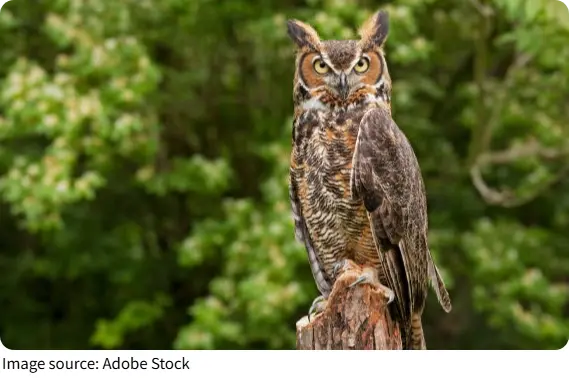
One of the reasons the Great Horned Owl is so widespread across North America is its adaptability. This owl can thrive in a variety of environments, from dense forests to open grasslands and even urban areas. Whether in a remote forest or a city park, the Great Horned Owl can make a home and find food, which makes it a highly resilient species.
Conclusion: The Master of the Night
The Great Horned Owl is a true master of the night, equipped with extraordinary hunting skills, stealthy flight, and impressive adaptability. Whether in the wild or in more urban environments, this iconic bird continues to capture our imaginations. As with all wildlife, it's essential to protect their habitats to ensure future generations can continue to experience the wonder of the Great Horned Owl.